Alerting apps in emergencies: the digital lifeline for modern crisis response
Why email, phone chains and messengers fail in an emergency — and how an alerting app significantly cuts response time. With real-world examples.
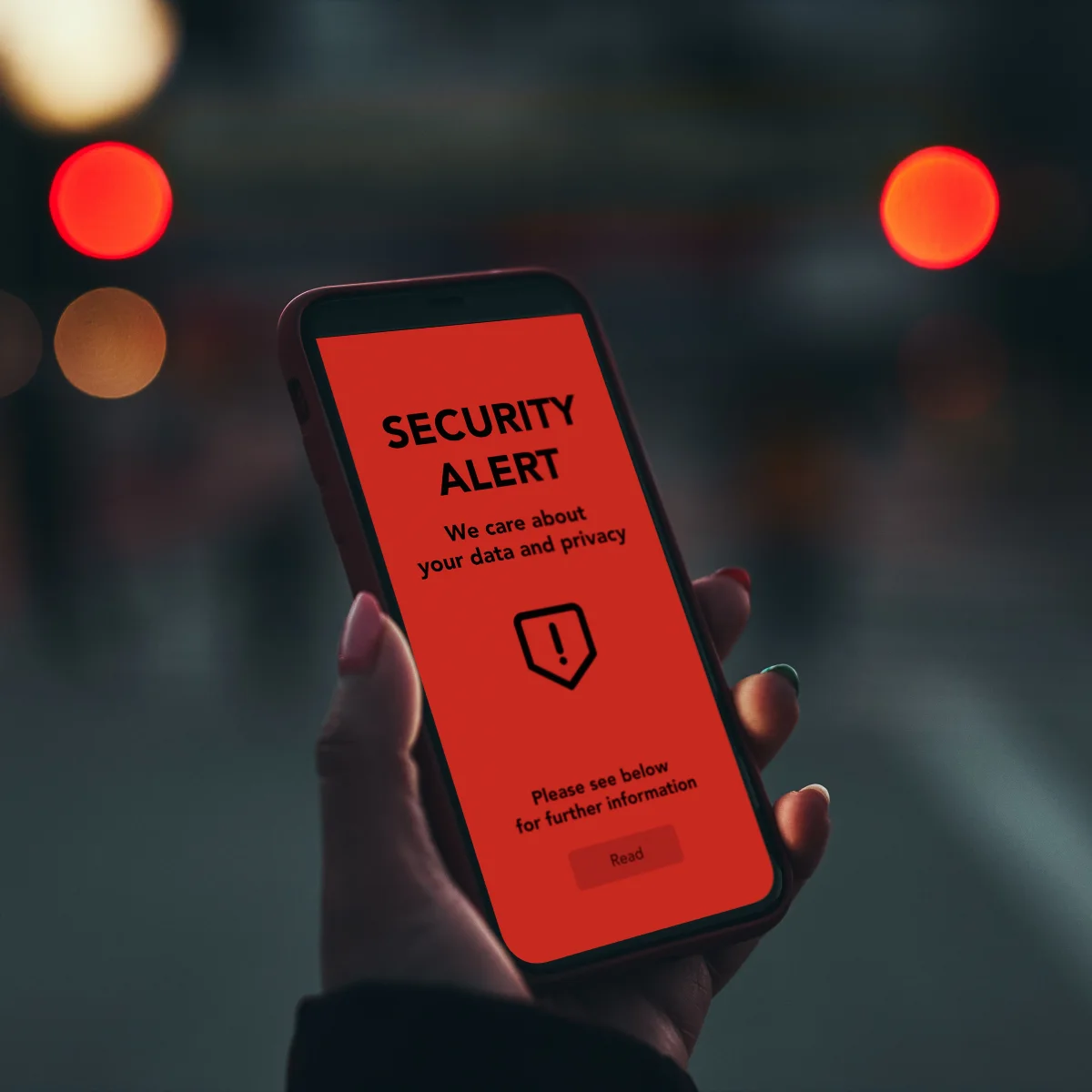
Fire, cyberattack, IT outage, lockdown: in a crisis every second counts. Yet many organisations still rely on email lists, phone chains or messenger groups in an emergency — tools that are weakest exactly when it matters. An alerting app closes this gap: it reaches the right people immediately via push, with clear instructions and acknowledgement.
Why everyday channels fail in an emergency
The familiar channels are built for normal operations, not for a crisis. In a cyberattack the email server itself is often affected; in a power outage the landline stays silent.
- Email: lands in spam filters, depends on the affected server — and nobody knows who actually read the message.
- Phone chain: serial and slow, fails on outdated numbers and busy lines.
- Messenger groups: no prioritisation, no acknowledgement, no escalation — the crisis message drowns between everyday chatter.
The first minutes decide
Organisations with structured, automated alerting activate their response teams within minutes — without structured alerting, valuable time passes before everyone responsible is even informed. That window decides whether an incident becomes a crisis.
Speed in an emergency is not luck — it's a matter of the right tools and rehearsed procedures.
What goes wrong in practice — real examples
Recent history provides plenty of material: during the worldwide IT outage of July 2024, caused by a faulty update to a widely used security software, airports, hospitals and authorities stood still — and in many places it was unclear who informs whom and how, because the usual channels were down too. Regional IT and telephony outages keep showing the same pattern: damage grows with every minute of uncoordinated response.
The economic lever: respond faster, lose less
Fast, coordinated response measurably reduces consequential damage — from production downtime to contractual penalties and reputational harm. Defining reporting paths, responsibilities and alerting in advance saves time exactly where it is most expensive.
What makes a good alerting app
An alerting app doesn't just replace email with a push notification — it structures the first minutes of an emergency. The mobile app can wake responsible people even in silent mode, provided critical alerts are enabled on the device; the web app gives the crisis team the overview.
- Predefined scenarios with escalation logic — one tap instead of improvised call-arounds.
- Role-specific instructions: every person sees exactly what to do now.
- Acknowledgement and feedback in real time: who has read, who takes over, who is unavailable.
- Independent of your own company infrastructure — works via the mobile network even when servers and phone systems are affected.
When is it worth it — and how to start?
From around 50 employees or several locations, informal reachability via shouts and private chats is no longer reliable. Alerting delivers the most value embedded in structured emergency management: clear reporting paths, defined roles and rehearsed procedures. If you want to go further, you grow it into a complete business continuity management.
Our advice: start with one clearly defined scenario — such as a total IT outage or a building evacuation — and rehearse it. The alerting app pricing is tailored to the mid-market; for a personal assessment, get in touch.
Related from our offering
Keep reading
 AI-generated image
Emergency or crisis? Why the distinction decides your response
Server-room fire at 3 a.m.: emergency or crisis? Separating the two terms cleanly means alerting the right people, escalating in time — and preventing a manageable incident from becoming an existential threat.
 AI-generated image
5 common mistakes in emergency planning — and how to avoid them
Perfect on paper, useless when it counts: why emergency plans fail on vague instructions, missing upkeep, IT tunnel vision, untrained roles and slow alerting — with practical examples and concrete remedies.